

Brand Activation Mistakes That Are Costing You ROI
- Britt Niven

- Apr 4
- 5 min read
Brand activation can be one of the most powerful drivers of engagement and revenue in modern marketing, but even experienced brands overlook the details that ultimately determine performance.
An activation can look impressive on the surface and still underdeliver commercially if the right planning foundations are missing. As a brand activation agency on the Gold Coast working across major sporting events and corporate campaigns nationally, we see the same gaps appear time and again. The difference between a good event experience and a high performing activation almost always comes down to the fundamentals.
Below is a strategic brand activation checklist covering the most common things brands forget and why each one matters.

Defining Clear KPIs Before Creative Development
Many brands jump straight into concept development before establishing measurable objectives. Without clear KPIs, assessing ROI becomes guesswork. Before any creative work begins, brands should define whether the activation is intended to drive awareness, data capture, sales leads, stakeholder engagement or product trial. Those objectives will shape every strategic decision that follows.
Aligning Brand Activation With Commercial Goals
Brand activation should support broader business objectives, not operate in isolation. Marketing, sales, and leadership teams need to be aligned on desired outcomes from the outset. If the business goal is pipeline growth, the activation design should actively support qualified lead capture and structured follow-up without that commercial alignment, activation risks becoming a visibility exercise rather than a growth lever.
Designing a Brand Experience for Audience Flow
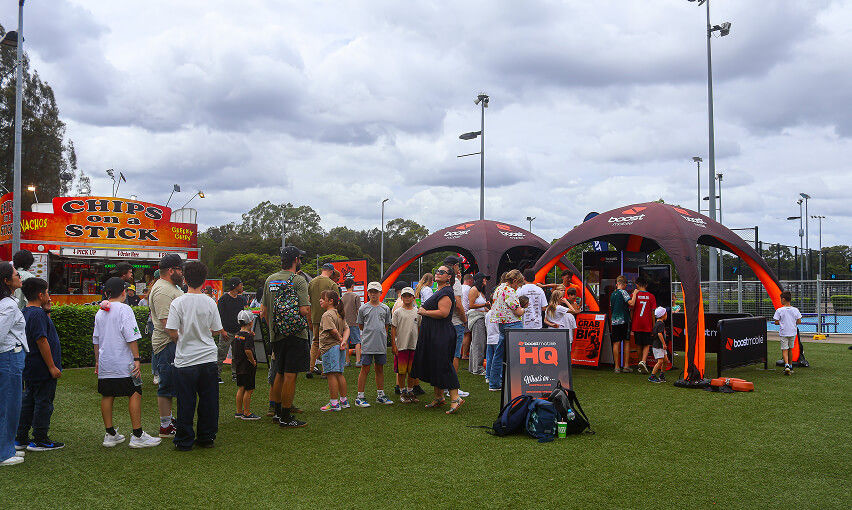
Footprint design is not purely about aesthetics, it is about movement. Poor spatial planning can create congestion, disengaged queues, or low dwell time. A well-planned brand activation considers entry points, engagement zones, waiting areas and exit flow. The audience experience should feel seamless from arrival until the end.
Planning the Queue Experience
At major sporting events and festivals, queues are inevitable. The strongest activations design the waiting experience intentionally. Queues can become high-energy anticipation zones when supported with leaderboards, live commentary or visible competition mechanics. When ignored, they become drop-off points. The queue strategy directly impacts participation rates, it is not a secondary concern.

Staff Training and Energy Management
Activation staff are often the single most important component of the entire experience yet briefing and training are frequently rushed. Staff must understand brand messaging, product details, data capture processes, engagement scripts, and escalation procedures. Energy and professionalism shape audience perception in real time. Premium experience depends as much on people as it does on production quality.

Data Capture Compliance
Privacy compliance is non-negotiable in Australia. Brands must ensure all data capture processes meet current legal requirements, including appropriate consent language and secure storage practices. Compliance gaps can undermine both reputation and measurable ROI. A compliant data framework should be built into the activation strategy from day one, not added as an afterthought.
Lead Qualification Strategy
Volume is not the same as value. Many brands optimise for the number of leads collected rather than the quality of those leads. A more strategic approach layers engagement mechanics so that participants demonstrate genuine interest before submitting their details. Better-qualified leads improve downstream sales performance and significantly strengthen activation ROI.

Content Capture Planning
Modern event activation extends beyond physical attendance, and it is vital to allocate adequate budget and planning for content capture. Professional photography, videography, and short-form social content should be structured within the activation timeline. Content assets generated onsite can support digital marketing, sponsorship reporting and future sales presentations.

Sponsorship Rights Integration
When activation sits within a sponsorship property, brands must ensure that rights are fully leveraged, including signage placement, athlete appearances, media mentions and digital amplification opportunities. Underutilised sponsorship rights represent missed value. A Gold Coast brand activation agency with experience across major sporting events like the NRL, AFL, WSL and Supercars will ensure those rights are maximised rather than overlooked.
Weather Contingency Planning
Outdoor brand activation in Australia carries real environmental risk. Shade structures, waterproofing, wind load compliance and heat management must all be factored into planning well in advance of build day. Failure to account for weather conditions can disrupt the experience, compromise safety and damage brand perception, particularly at high-profile events where there is no room for reactive fixes.
Risk Assessments and Operational Compliance
Thorough risk assessments are essential. Structural engineering sign-off, power safety, trip hazard identification, emergency exit planning and crowd management procedures all need to be documented before bump-in begins. Operational discipline protects both the brand and the audience. It is also increasingly a requirement for event rights holders and venue operators.
Amplification Strategy
An activation should never rely solely on foot traffic. Pre-event promotion, live social coverage and post-event content distribution extend reach well beyond the physical footprint and increase overall ROI. A strong amplification strategy ensures that the activation influences audiences who were never on-site, turning a single day event into an extended marketing moment.

Internal Stakeholder Reporting
Without a defined reporting framework, activation performance becomes difficult to communicate upward. Executives need more than anecdotal highlights. Reporting should cover engagement metrics, lead data, content performance and commercial outcomes. Clear, structured reporting also strengthens future budget justification, an important consideration for any brand investing at scale.
Post-Event Follow-Up Process
Neglecting post-event conversion is one of the most common and costly mistakes in brand activation. Leads generated onsite must be nurtured through structured follow-up campaigns before the engagement window closes. Without a follow-up process in place, the momentum built during the activation is lost within days.
Evaluating Long-Term Impact
Activation performance is often assessed too narrowly. Immediate metrics matter, but brand perception shifts, new partnership conversations and deepened stakeholder relationships can influence long-term commercial growth in ways that do not appear in a 48-hour report. A holistic evaluation framework ensures that the full value of the activation is recognised and communicated.
Why This Checklist Matters
Brand activation environments are increasingly competitive, at major events, multiple brands are often activating side by side. Those who execute with precision stand out. Those who overlook operational detail risk underperformance regardless of how strong the creative concept is.
A comprehensive brand activation checklist protects both the investment and the brand's reputation, ensuring that creative ambition is backed by strategic and operational discipline at every stage.
Final Thoughts
Brand activation is not simply about showing up with a visually impressive footprint. It is about delivering a cohesive experience that aligns with commercial objectives, operational rigour and measurable ROI.
When it comes to brand activations, most brands commonly overlook significant performance, and in 2026, the bar is high. Audiences expect quality and interaction. Businesses expect a return. The brands that consistently deliver are those that plan beyond the obvious and execute with intention across the full activation lifecycle.
Cielo House is a brand activation agency based on the Gold Coast, delivering sponsorship experiences, corporate hospitality and experiential campaigns across Australia. Talk with us today to discover how we can take your brand to new heights.